Analog and digital signals: what the difference means
Analog quantities vary continuously. Digital systems represent information with discrete symbols, even when a physical radio wave carries those symbols.
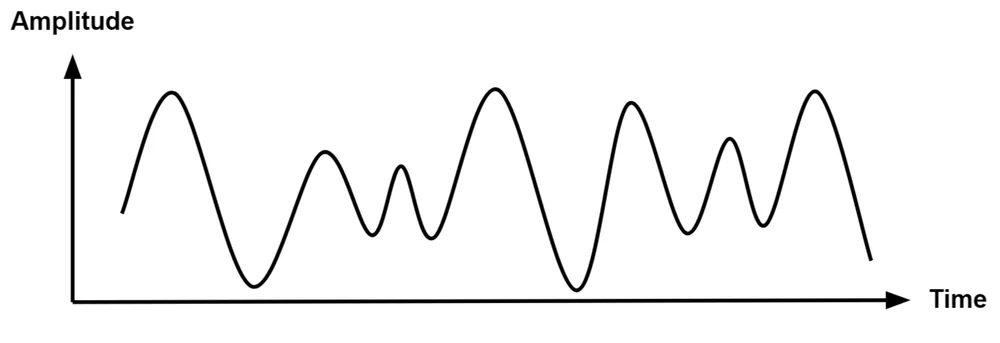
A voltage that follows the changing pressure from a microphone can be used as an analog representation of sound. In a digital recording system, a converter samples that signal at defined moments and represents each sample with one of a finite set of numerical values. Those samples can be stored or transmitted as data.
A physical radio signal still varies continuously in time, even when it carries digital information. A transmitter encodes symbols in the waveform, and the receiver estimates the symbols from the waveform it receives. The receiver’s ability to do that depends on the signal, the surroundings and the design of the link.
The distinction explains why analog and digital links can behave differently as conditions change. An analog audio link may become progressively noisier. A digital link can keep producing usable output until enough errors accumulate, at which point audio may skip, mute or fail. The exact behaviour depends on the receiving system and how it handles errors.